






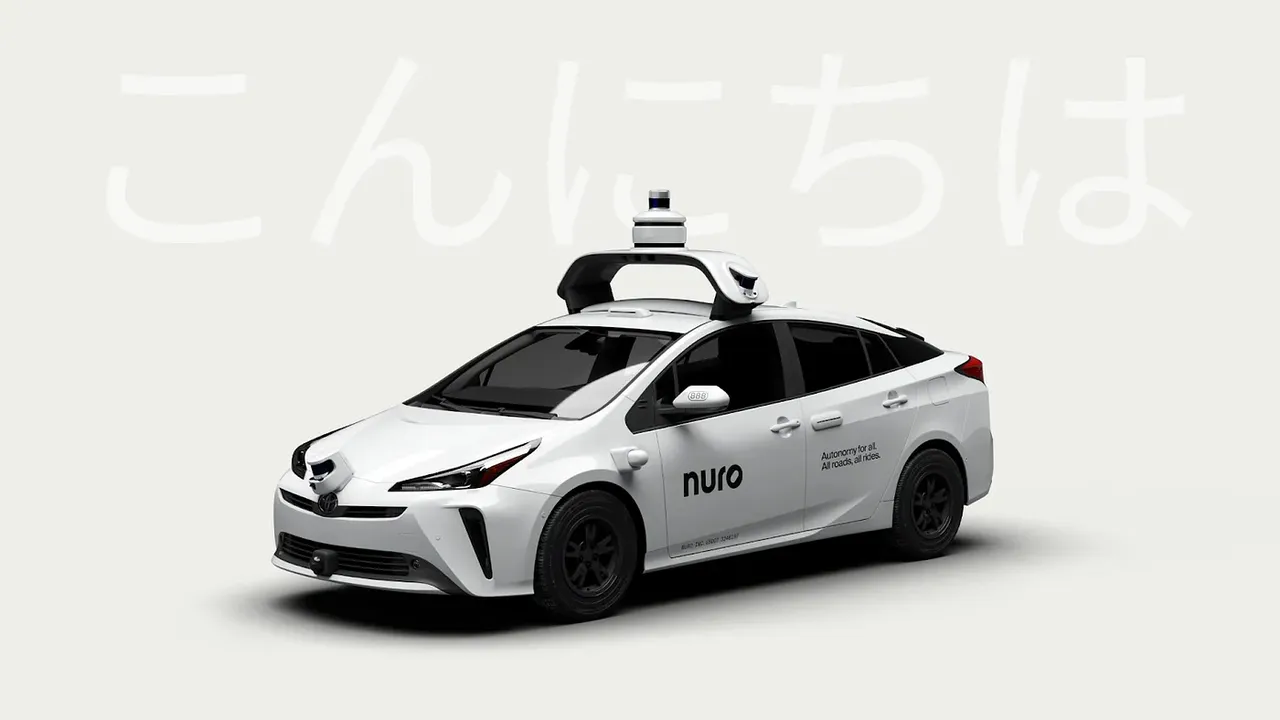









Nuro, a Silicon Valley startup supported by major investors such as Nvidia, Uber, and SoftBank, has begun testing its autonomous driving technology in Japan. The company recently started operating Toyota Prius vehicles equipped with its self-driving software on public roads in Tokyo. Each vehicle still includes a human safety operator behind the wheel as a precaution. This testing effort represents Nuro’s first expansion outside the United States.
Testing in Japan introduces several new challenges for the company. Drivers in Japan travel on the left side of the road, and Tokyo’s streets are known for dense traffic and complex layouts. In addition, road signs and lane markings differ from those in the U.S., requiring the system to adapt to unfamiliar conditions. Nuro, which opened a Tokyo office last August, has not revealed how many vehicles are participating in the trials or when it might remove the safety drivers. However, the company hinted that its Tokyo tests are just the beginning of broader international deployments.
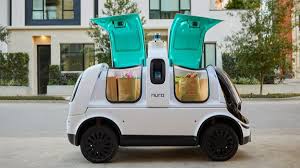
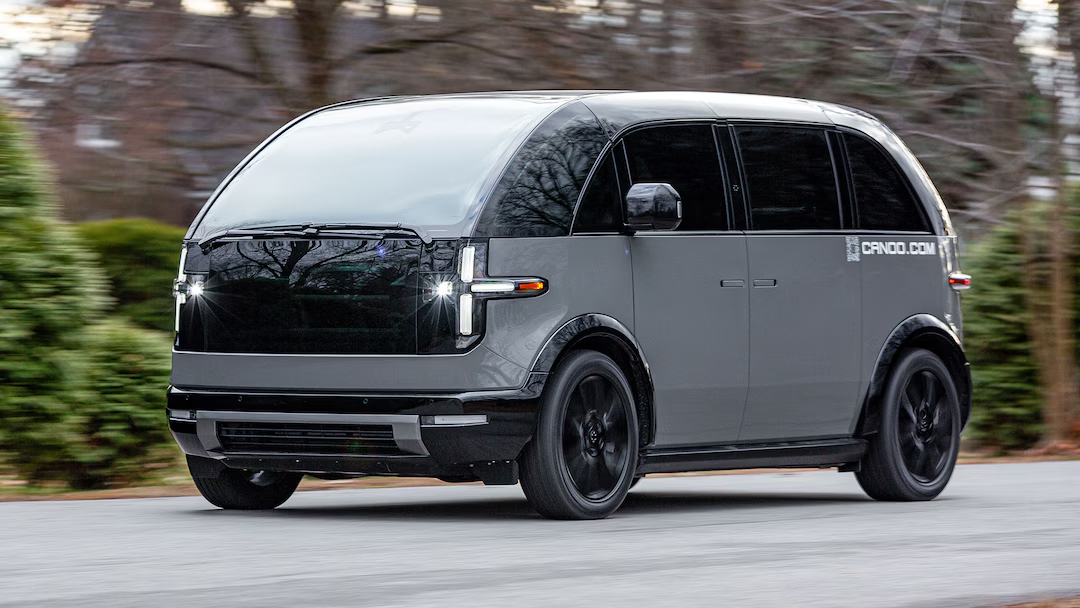
Founded in 2016 by former Google self-driving engineers Dave Ferguson and Jiajun Zhu, Nuro originally focused on building low-speed delivery robots designed to transport goods on public roads. The startup quickly attracted attention from investors, including a $940 million investment from SoftBank’s Vision Fund in 2019.
Despite its early momentum, rising development costs and industry consolidation forced Nuro to rethink its strategy. In 2024, the company abandoned its delivery robot program and shifted toward licensing its autonomous driving technology to automakers and mobility providers such as ride-hailing and delivery companies.
At the core of Nuro’s technology is an end-to-end AI foundation model designed to improve through real-world driving experience. The company refers to this approach as “zero-shot autonomous driving,” meaning the system can operate in new environments without being trained on location-specific data. According to Nuro, its software was able to navigate Tokyo’s roads without prior exposure to Japanese driving datasets. A similar end-to-end AI strategy is being pursued by the U.K.-based autonomous driving startup Wayve.
While Nuro emphasizes the flexibility of its AI system, it also says safety remains a priority. Before deployment, new versions of the software are tested on closed courses and evaluated in simulation environments designed to expose edge cases. When vehicles are first introduced to public roads, they operate in “shadow mode.” In this phase, human drivers remain in control while the AI generates its own driving decisions in the background without sending commands to the vehicle. Engineers then analyze these outputs to determine whether the system is ready for full autonomous operation.
The company has continued to attract funding for its technology. In 2025, Nuro raised $203 million in two tranches as part of a Series E funding round. The round included existing investor Baillie Gifford as well as new backers Icehouse Ventures, Kindred Ventures, Nvidia, and Pledge Ventures. Uber also joined the round after announcing plans to make a multi-hundred-million-dollar investment in Nuro as part of a broader partnership with electric vehicle manufacturer Lucid.